
At Ekmi Fertility, discussions about egg freezing rarely end at – how does it work. Once someone gets how the process works – the stimulation, the retrieval, the storage – almost inevitably follows a second question: but what if I never need them? If you are looking into egg freezing, IVF or even surrogacy in India, knowing what happens to unused frozen eggs should be part of your fully informed decision.
First, Let’s Discuss Their Longevity
When properly stored, frozen eggs can remain viable for 10 years or longer. Some studies have reported successful pregnancies from eggs frozen more than a decade. So “unused” doesn’t mean wasted – it means on hold.
Your fertility specialist will guide you through storage timelines and renewal options based on your specific case. Storage is not infinite by default; it requires a consent renewal every few years and fees each year.
So What Are Your Options?
When frozen eggs are left over – if you conceived naturally, if your plans changed or if your family is complete – there are generally four options:
- Keep them – if you’re on the fence or want to leave a door open
- Utilize them in future IVF cycle – even if you require a gestational surrogate and are considering surrogacy options
- Give them to another person or couple – helping someone else grow their family, with all of the legal documentation
- Give them to medical research – helping advance reproductive science and embryology
- Let them be thrown away – for a very good, personal reason that many people come to after economic deliberation
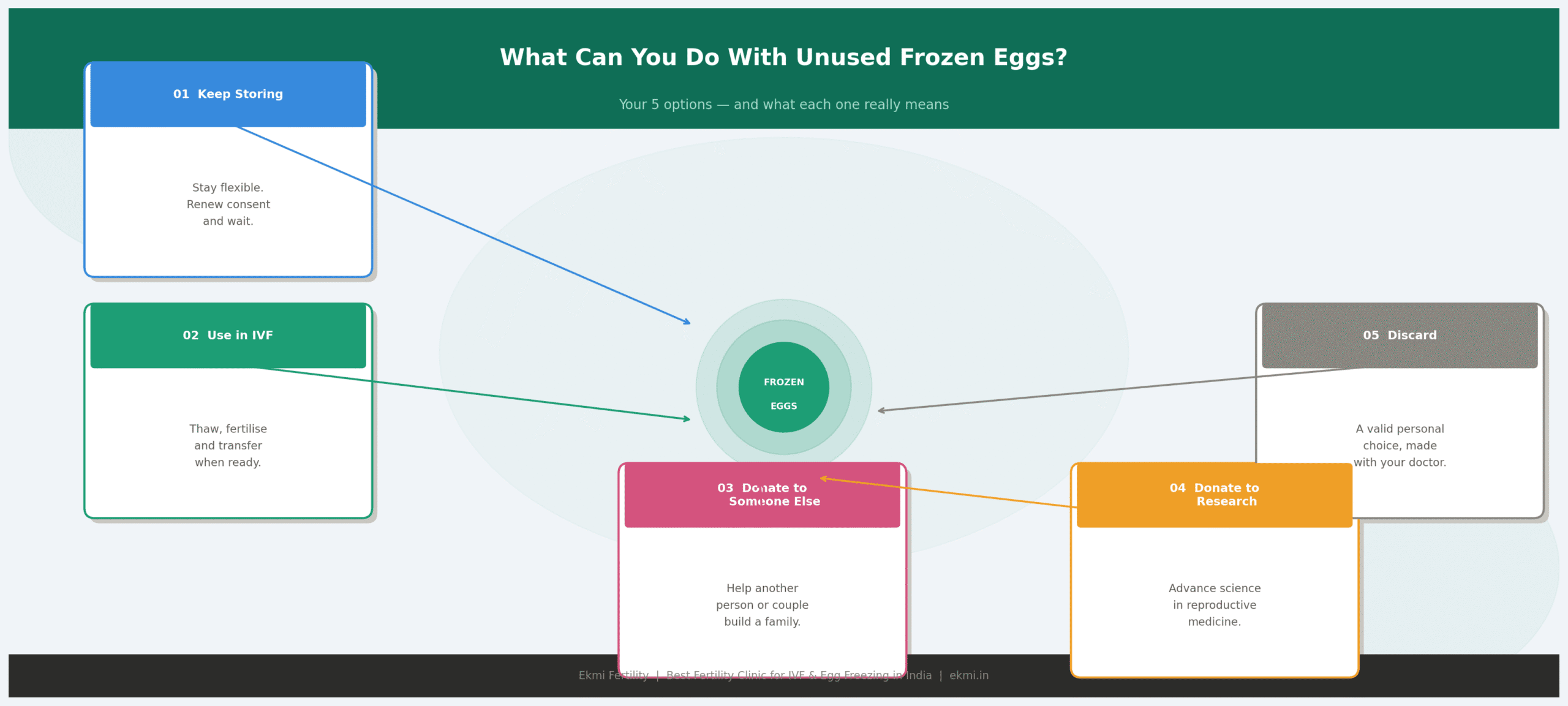 There is no “right” option among any of these. Actually, it comes down to your values, circumstances and gut at the time.
Donation: What It Actually Involves
Egg donation is more common than people think. At Ekmi Fertility, our fertility doctor in India takes donors through the legal and emotional aspects – not only the medical ones. When donating to another, anonymity preferences and legal rights are set in stone before any contract is signed. If you donate your eggs for research, they might help to study fertilization or embryo development or investigate genetic conditions.
Neither choice is made lightly, nor should it be.
The Emotional Side You’re Not Prepared For
Here’s what the brochures don’t include: Determining what to do with unused frozen eggs can be difficult. Those eggs mean something – hope, possibility, identity – for a lot of people. A quality fertility specialist doesn’t just handle your medical file – he or she helps you think through these decisions when they come up.
At Ekmi Fertility, we are one of the best fertility clinics in India for a reason: We view this as a human conversation, not a checkbox exercise.
What About the Costs?
The egg freezing cost in India may differ from clinic to clinics, stimulation protocols and storage period. Ekmi Fertility provides affordable egg freezing treatment in India with upfront costs – no unexpected annual fees, no shocks. If you’re considering IVF and egg freezing in India separately or together, we can design a financial plan that makes sense for both.
FAQs
Q: What is the egg freezing cost in India at Ekmi Fertility?
So, what does egg freezing cost? It depends on your stimulation protocol and the length you would like to store your eggs! With Ekmi Fertility, you’ll have clear upfront pricing.
Q: How long can eggs be stored after the freezing process?
Most clinics freeze eggs for 10 years, with renewals of consent. However, the best source of information will be your fertility doctor in India, who will make recommendations depending on current regulations and your specific situation.
Q: If I freeze my eggs, will I still be able to use them in an abortion later on?
Absolutely. When you are ready, the frozen eggs will be thawed, fertilized and transferred in a standard IVF cycle.
Q: Can they use unused eggs for surrogacy?
Yes. If you have egg freezing as part of your surrogacy journey, it could mean that if you use a gestational surrogate, you can collect frozen eggs and fertilize them – though better surrogacy sites may help to guide the rest of the process.