

No one warns you about the paper trail. For years you are preoccupied with the medical aspect – fertility treatment, IVF and surrogacy consultations, hormone protocols – and then the legal reality arrives on your desk in a file so weighty no-one warned you to be prepared. We have seen couples travel to foreign countries for IVF cycles and return to us looking drained and more exhausted after unsuccessful cycles, unaware of the practical realities regarding India’s regulatory framework. Ok, let’s go through legal process of surrogacy in India for OCI couples in an open, direct and actually understandable (without legalese) manner.
Request a Free Consultation with Our Doctors and Experts.
📞 Call: +91 9319737070 | 💬 WhatsApp: +91 9319737070
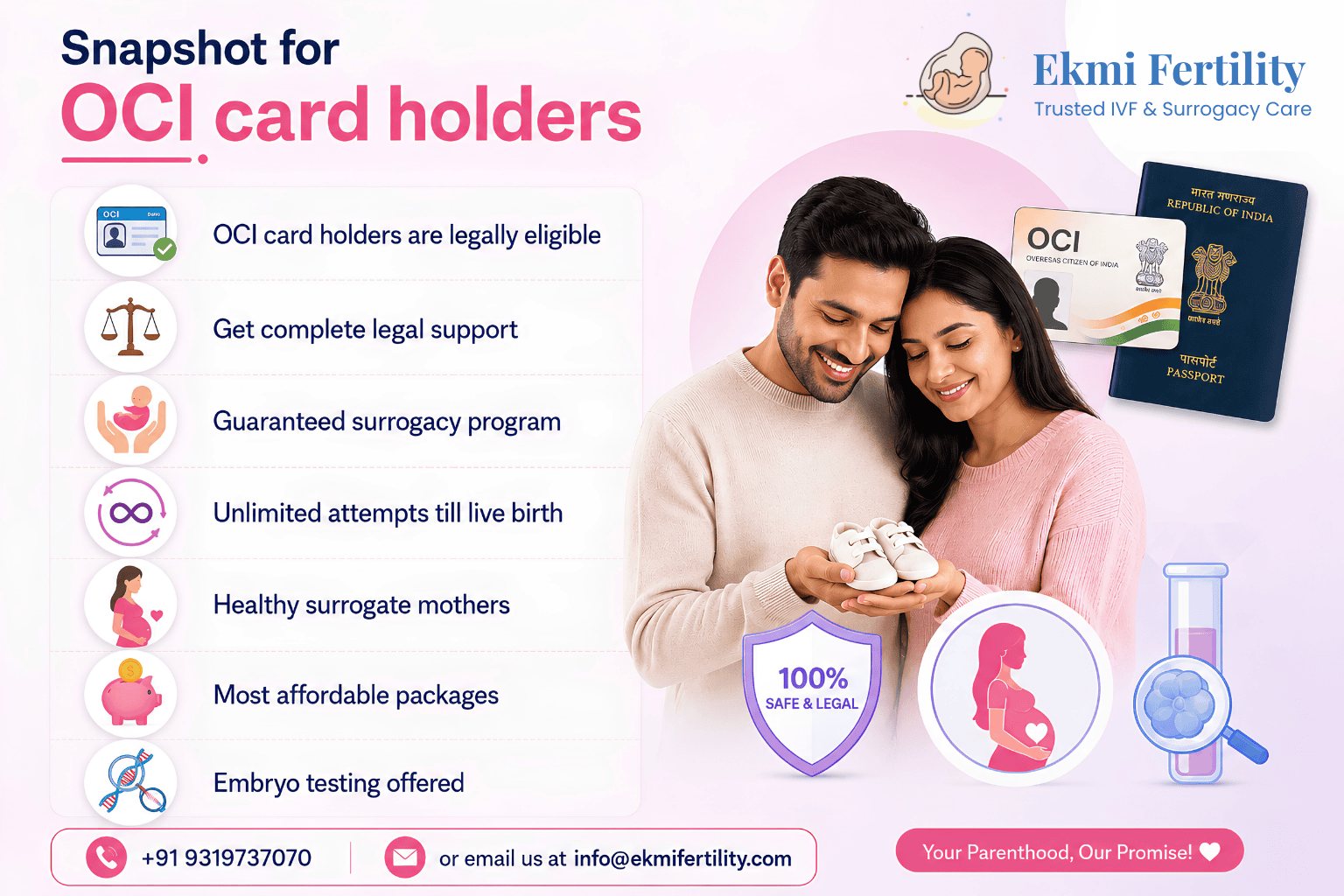
What the Law Actually Says
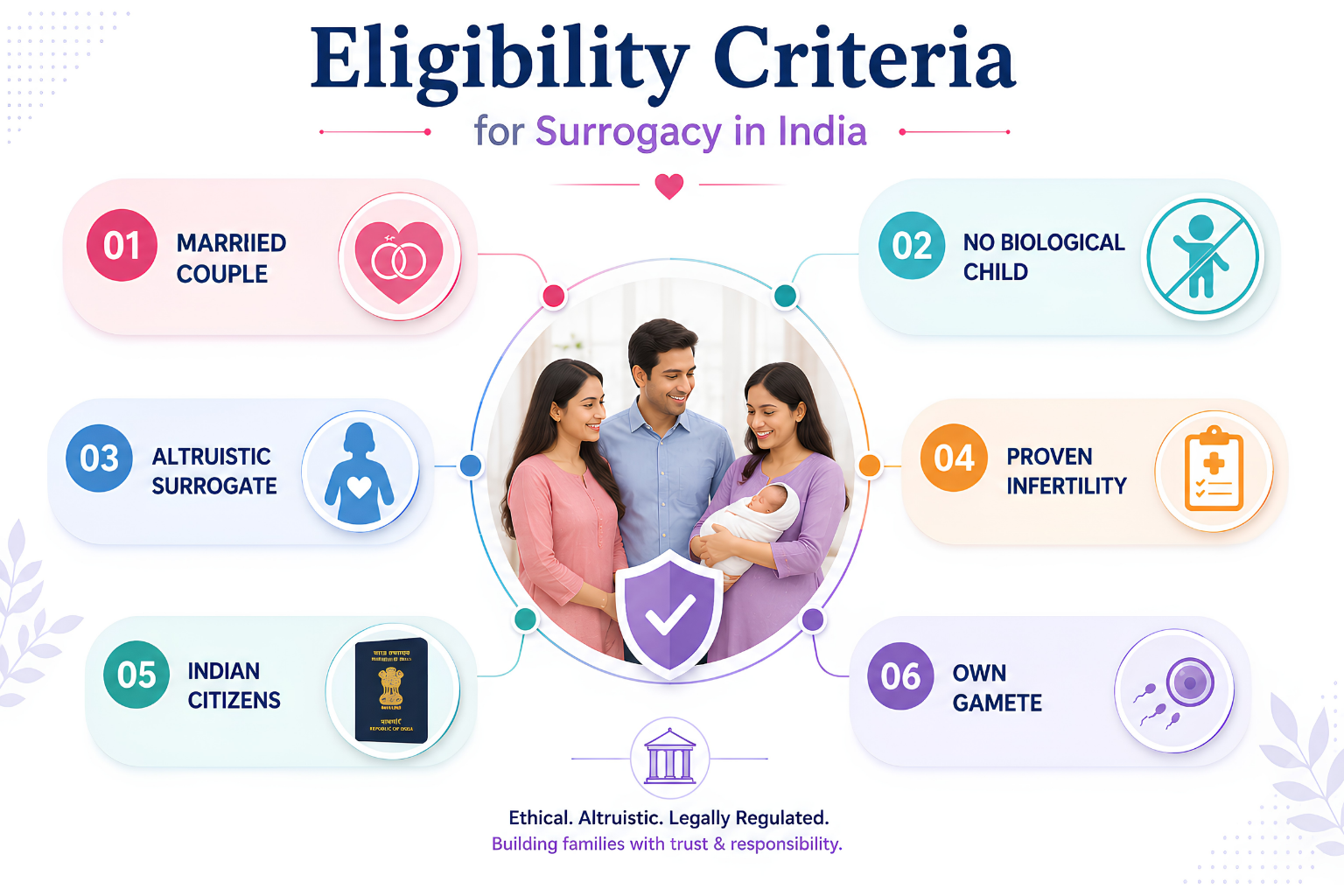
The Surrogacy (Regulation) Act 2021 of India changed the game. The most important things OCI couples need to know from the outset are:
- Surrogacy must be altruistic – you may not pay your surrogacy mother any more than her medical expenses and insurance coverage
- At least one partner should be of Indian origin possessing valid OCI documentation.
- Infertility – must be diagnosed and documented by a registered specialist in the field of infertility
- The indication is required for both the partners to be in tier of government-mandated age (23-50 for women, and 26-55 for men)
- According to ART & Surrogacy Regulation Act, the surrogacy doctor and clinic should be registered
This isn’t cruel – it’s the way so that everyone involved, lithe surrogate included, is protected. Yes, this takes genuine preparation.
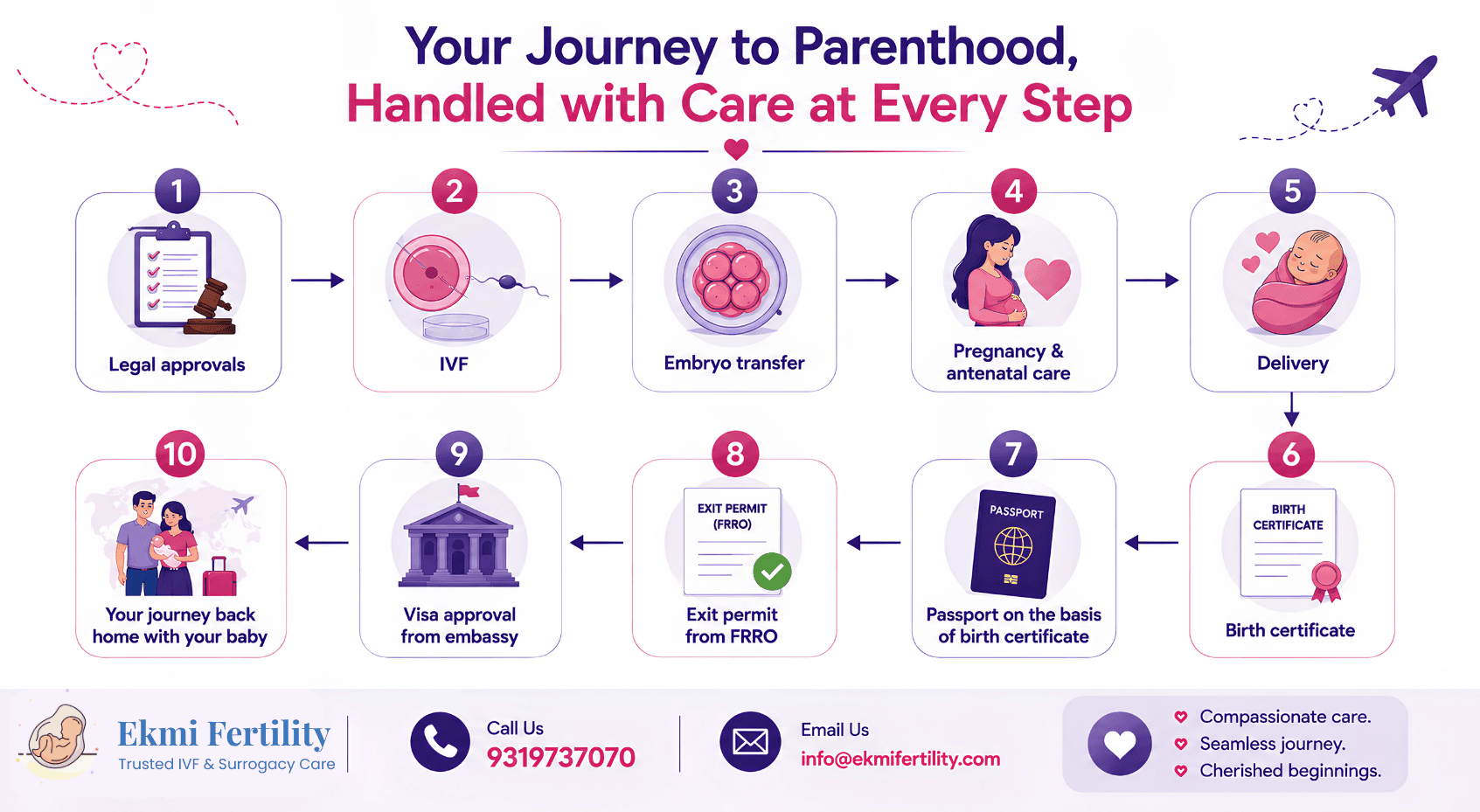
The Legal Steps, In Order
This is the process of how it really goes down:
- Step 1 – Medical Eligibility Certificate – Your fertility specialist writes a formal certificate that confirms medical necessity. This step is a prerequisite for all surrogacy applications to go ahead.
- Step 2 – Surrogacy Mother Conditions – Current laws dictate that the surrogate mother must be a close relative, have had 1 individual child, married and aged from between 25-35 years old, medically fit with good mental health.
- Step 3 – Surrogacy Board Approval – This agreement must be approved by the State Board as well as National ART Board. This filing is done behind the scenes by your clinic’s legal team – hopefully from the best surrogacy clinic you selected.
- Step 4 – Legal Agreement – This list will be followed-up with a registered surrogacy agreement prepared in a collaborative manner between all parties involved. This includes medical responsibilities, financial provisions, parental rights and procedures immediately after the birth.
- Step 5 – Court Order to Declare Parentage – Intended parents file notice of a pre-birth parentage order prior to delivery. This way, the birth certificate shows the names of the intended parents straight away.
Ready to explore your surrogacy options? Get a Free Consultation with our doctors and experts to understand the next steps for your journey.
📞 Call: +91 9319737070 | 💬 WhatsApp: +91 9319737070
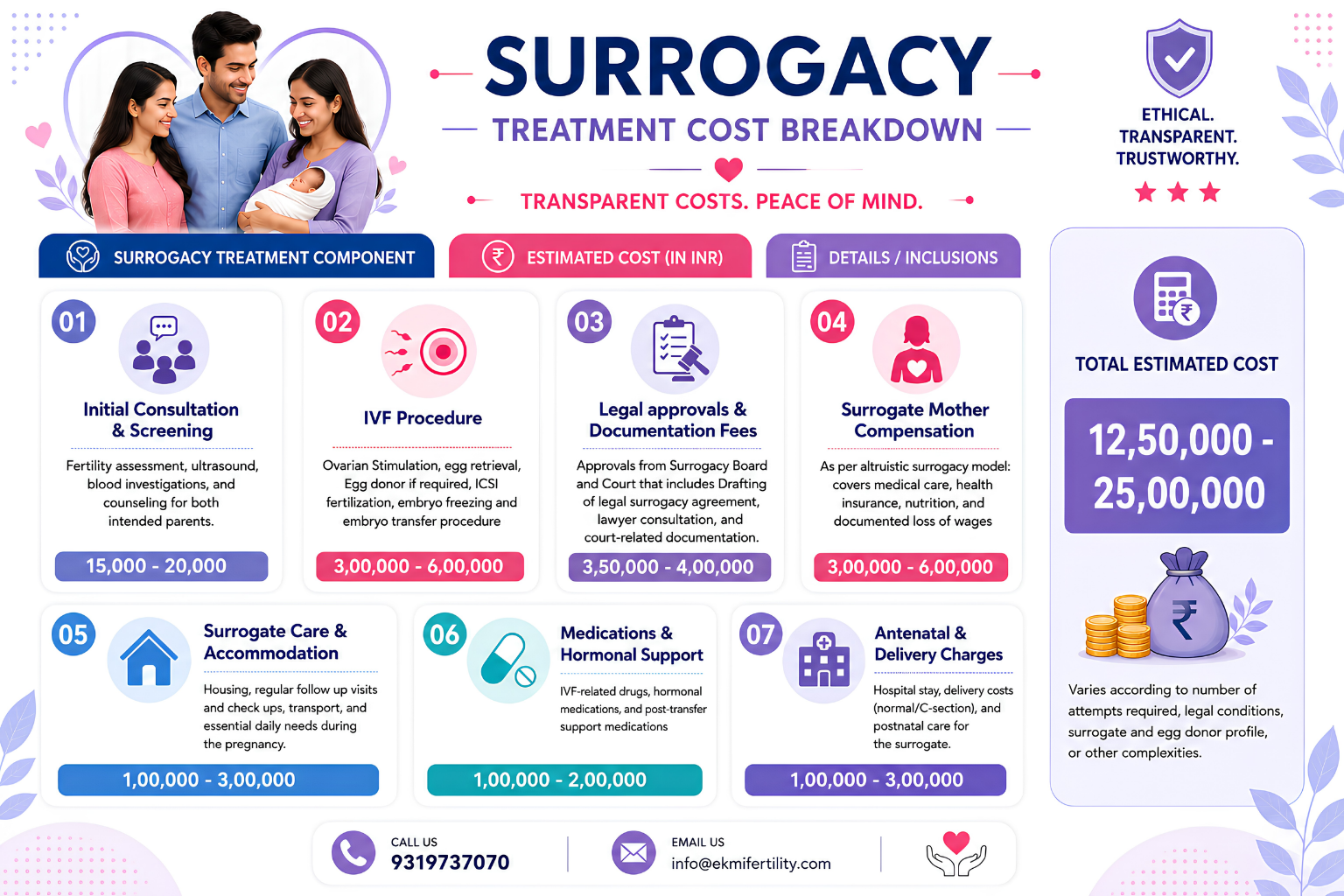
What This Means for Cost
Cost of surrogacy including legal fees – but helps safeguard your investment. Ensure when comparing surrogacy packages, that legal documentation, board approvals and parentage orders are specifically documented. Packages that leave these out are an expensive surprise later. The cost of surrogacy in India with a compliant, fully supported program at Ekmi Fertility starts from Rs.18-25 lakhs. From end-to-end legal support – affordable surrogacy means no holes in the blanket.
Book Your Free Consultation with Our Doctors and Experts.
📞 Call: +91 9319737070 | 💬 WhatsApp: +91 9319737070
We Know This Feels Like a Lot
Because it is. And you have enough to carry around already. What we can tell you though is that once you find your way around the legal maze, there is a reassurance from it too. This applies especially for OCI couples who want to have clarity about parental rights on both sides of the border. Our team is here to ensure you meticulously understand, and walk through, every document you sign, each board you’re waiting on, as well as every upcoming step.
FAQs
Q. Given the surrogacy law is what it is, can OCI couples be allowed to use a gestational surrogate?
Yes – Indian law only recognizes gestational surrogacy (in which the surrogate has no genetic ties to a child).
Q. Is the IVF protocol different for surrogacy?
Not significantly. Embryo transfer timing with surrogate cycle, so otherwise standard IVF and surrogacy protocols apply.
Q. What is the timeframe for getting legal approval from surrogacy board?
On average 3-6 months depending on documentation completeness and state level processing times.
Q. If a relative of the surrogate is involved, what is the status of parental rights?
A legal contract and court ordered parentage cannot be overruled by biological relationship – intended parents from birth are the legal parents.