
Is your way of life actually impacting your fertility? The short answer: yes, almost certainly more than you realize. At our clinic, Ekmi Fertility, we meet many such couples who are amazed to discover that their daily habits could be obstructing the path to parenthood. Let’s dissect what it actually is that matters.
How Lifestyle Choices Impact Fertility
Your body doesn’t compartmentalize “lifestyle” and “reproductive health. Everything connects. Every decision we make from day to day is either building or depleting our fertility potential.
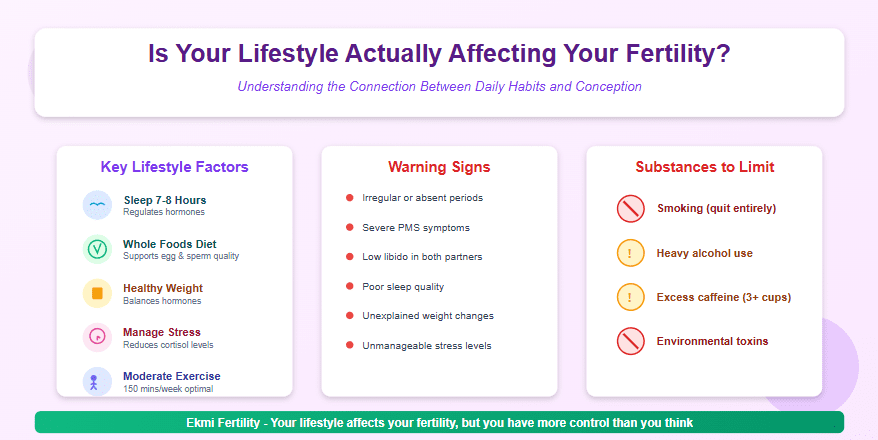
Key lifestyle factors affecting fertility:
Weight matters both ways – Being under or overweight disturbs hormone production and ovulation cycles
Sleep deprivation messes with your reproductive hormones such as leptin and ghrelin
Chronic stress may lead to increased levels of the hormone cortisol, which can suppress ovulation and decrease sperm quality
Women can stop getting periods completely if they exercise too much
Poor nutrition doesn’t feed your body the things it needs to get pregnant
The True Effect of Diet on Fertility
Diet has a direct impact on egg quality, sperm health and ability of your body to host a pregnancy. It’s not about perfect eating so much as a reliable pattern.
Trans fats, processed foods, and too much sugar all produce inflammation that can disrupt reproduction. Antioxidant dense diet, good fats and lean proteins on the other hand is going to support your hormones.
Here’s the deal: Extreme diets backfire. Your body needs enough calories and nutrients to generously support reproduction. When it detects scarcity, fertility gets trumped by survival.
To know more Call 9319737070 or email us at info@ekmifertility.com
Substances That Sabotage Conception
Alcohol and caffeine – Having the odd drink is probably safe, but heavy drinking can reduce fertility in both men and women. Same for caffeine above 2-3 cups per day.
Smoking – This one’s non-negotiable. Smoking ages your eggs, damages sperm DNA and lowers IVF success rates by about 50 percent. Secondhand smoke counts too.
Recreational drugs – These do a number on sperm production and egg quality, sometimes damage that lasts long after you’re done.
Environmental Factors You’re Probably Ignoring
Endocrine disruptors lurk in products we use every day: plastics, pesticides, cosmetics and cleaners. These are hormone-mimicking chemicals, able to trick your reproductive system.
What this really says is: heat your food in glass instead of plastic. Choose organic when possible. Read ingredient labels on cosmetics. Small switches add up.
Is Your Lifestyle Affecting Fertility? Warning Signs
Your body will signal to you when lifestyle factors are sabotaging:
Irregular or absent periods
Severe PMS or heavy bleeding
Low libido in both partners
Poor sleep quality
Unexplained weight changes
Intense stress you can’t control
To know more Call 9319737070 or email us at info@ekmifertility.com
Making Changes That Actually Matter
You don’t need perfection. You need consistency. Focus on these priorities:
Get to sleep 7-8 hours per night – This is critical to balancing hormones.
Exercise in moderation – Aim for 150 minutes a week of moderate activity, not an extreme workout.
Actively manage stress – Whether through meditation, therapy or hobbies that relax you.
Eat real foods – Vegetables, fruit, whole grains, lean protein, etc. That’s the foundation.
Limit toxins – Drink less alcohol, stop smoking and avoid unnecessary medication.
We at Ekmi Fertility can guide you with the lifestyle factors that apply to your own situation. Sometimes it’s easy to fix what’s wrong and make conception a reality. In other cases, medical treatment combined with changes in your lifestyle will offer you a greater chance.
The bottom line? Your lifestyle really does influence your fertility, but there’s more under your control than you may realize. Begin where you are, make changes that work for you and get professional guidance when needed.
FAQs
Can lifestyle factors boost fertility naturally?
Yes, weight, nutrition stress and sleep are able to positively impact natural conception rates in particular for the unexplained infertility group.
How long before lifestyle changes impact fertility?
Sperm regenerates every 3 days, and pregnant tissues in females can last for 3-4 months. Do not expect results for changes for at least 90 days.
Does stress really prevent pregnancy?
Chronic stress can interfere with reproductive hormones, potentially resulting in anovulation or lower sperm quality and therefore making it more difficult to conceive.
What is the best diet for fertility?
Both men and women will benefit from a Mediterranean-style diet characterized by plenty of nutrients from vegetables, healthy fats, whole grains and lean protein.
To know more Call 9319737070 or email us at info@ekmifertility.com